
Magnesium Glycinate for Sleep: Does It Actually Work?
Short answer: yes — but probably less than the internet suggests. And for some people, not at all.
Magnesium glycinate for sleep has blown up on social media, with TikTok videos racking up millions of views and Reddit threads full of people swearing by it. There’s now a real clinical trial — published in Nature and Science of Sleep in 2025 — that actually tested it properly. But when you look at what the data found, the effect is more modest than the supplement industry would have you believe. That’s worth knowing upfront.
Here’s what the evidence actually says, who’s most likely to benefit, what dose to use, and the honest caveats that usually get left out.
Key Takeaways
- A 2025 randomized controlled trial found magnesium glycinate improved sleep — but the effect was small, and most pronounced in people with already-low dietary magnesium
- It works by supporting GABA pathways, helping moderate evening cortisol, and assisting melatonin production — not by sedating you
- It’s not a sleeping pill. Don’t expect to feel it like melatonin. Think of it as removing a barrier, not pressing a switch
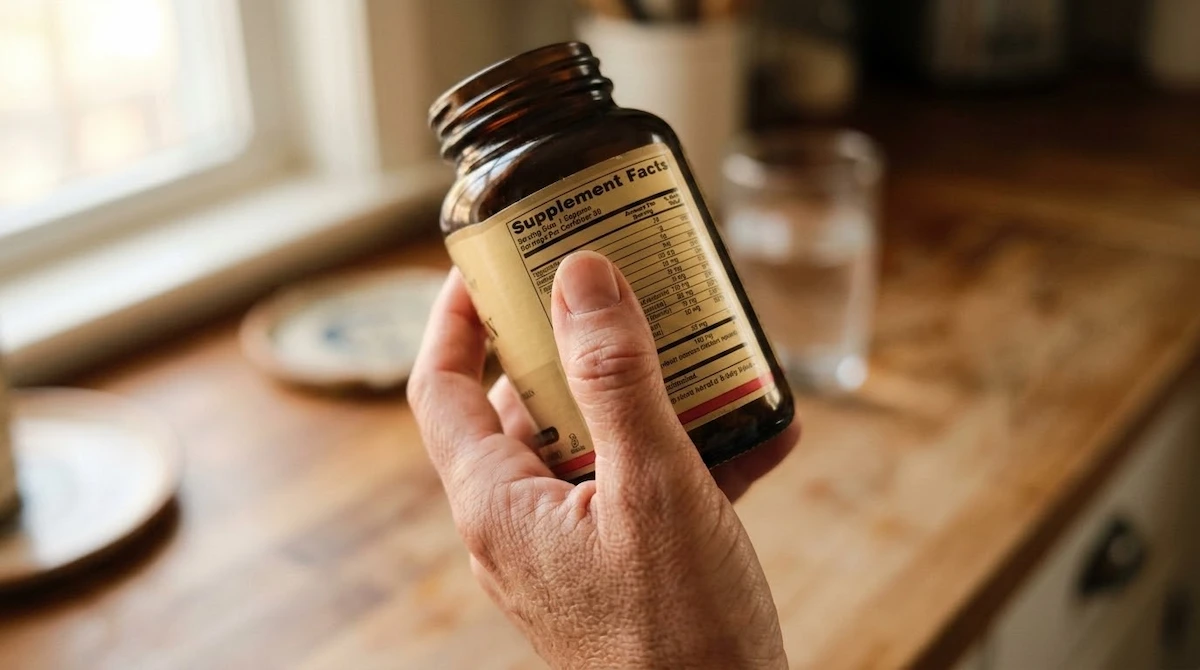
- The label is confusing — check elemental magnesium on the Supplement Facts panel, not the total compound weight on the front
- Always check with a doctor before starting, especially if you take medications or have kidney disease
What Is Magnesium Glycinate, Exactly?
Magnesium glycinate (also labelled magnesium bisglycinate — same thing, different name) is magnesium bonded to glycine, an amino acid. That bond, called chelation, does two practical things: it makes the magnesium more stable through digestion, which improves absorption, and it dramatically reduces the gut irritation that cheaper forms like magnesium oxide can cause.
Glycine isn’t just along for the ride, though. As an inhibitory neurotransmitter in the nervous system, glycine has mild calming properties of its own. Some evidence suggests it may support the transition into sleep — so magnesium glycinate delivers a modest double effect, which is probably why it’s become the preferred form for sleep over citrate or oxide.
According to Mayo Clinic Press, magnesium glycinate is well absorbed and better tolerated than many other magnesium forms — a meaningful practical advantage when you’re taking something nightly.
The Evidence: What the Research Actually Found
Here’s where it gets interesting. And a little complicated.

The Strongest Trial So Far
The best evidence we have comes from a 2025 randomized, double-blind, placebo-controlled trial by Schuster and colleagues, published in Nature and Science of Sleep. It enrolled 155 adults aged 18–65 with self-reported poor sleep and ran for four weeks. The dose: 250 mg of elemental magnesium as bisglycinate, taken nightly.
The result: people taking magnesium glycinate showed a statistically significant reduction in insomnia severity scores compared to placebo. Most of the improvement happened in the first two weeks and was sustained through to the end.
So far, so promising. But here’s what most writeups bury.
The average Insomnia Severity Index (ISI) score dropped by 3.9 points in the magnesium group — versus 2.3 points in the placebo group. That’s a real-world difference of just 1.6 points on a 28-point scale. The study’s own definition of “clinically meaningful” improvement was a 6-point drop. By that measure, 81% of participants on magnesium did not reach it.
The effect size was small (Cohen’s d = 0.2). The benefit was most pronounced in participants with the lowest dietary magnesium intake at baseline.
That’s not nothing. It’s also not a sleep revolution.
What Older Research Shows
The Schuster trial isn’t the first in this space. A 2012 double-blind, placebo-controlled trial in older adults with primary insomnia found that 8 weeks of magnesium supplementation improved time to fall asleep, sleep efficiency, and early-morning waking compared to placebo. The population was elderly and under clinical supervision, so the results don’t map cleanly onto younger, healthy adults — but the direction is consistent.
A 2024 systematic review in Cureus examined the broader magnesium and sleep literature and found: modest improvements in self-reported sleep quality and sleep onset latency, mixed results for total sleep time, and study quality ranging from low to moderate. One important caveat — most of those trials used magnesium oxide or magnesium citrate, not glycinate specifically. The 2025 Schuster study is the most rigorous direct test of the glycinate form to date.
The Bottom Line on Evidence
Real. Modest. Most helpful for people who are genuinely short on magnesium. Not a miracle; not snake oil.
Why It Might Help: The Mechanisms
Three overlapping pathways explain how magnesium supports sleep.
GABA activation. Magnesium binds to GABA receptors in the brain — these are responsible for slowing neural activity and helping your mind settle at night. Low magnesium means the brain has a harder time shifting into rest mode.
Cortisol moderation. Magnesium helps regulate the HPA axis — the system controlling cortisol output. When magnesium runs low, evening cortisol can stay elevated longer, keeping you alert when you’d much rather be winding down.
Melatonin support. Magnesium acts as a cofactor in the enzyme pathway that converts serotonin into melatonin. The evidence here comes primarily from animal studies, and the full mechanism in humans isn’t completely mapped — but low magnesium intake is consistently associated with lower melatonin production across the available research.
None of this works like a sedative. Magnesium doesn’t knock you out. You won’t feel it the way you feel antihistamine or melatonin kicking in. If it works for you, you’ll mostly notice it in hindsight — falling asleep took a little less effort, waking at 3am happened a little less often.

The “Is It Worth Trying?” Decision Framework
Not everyone will benefit from magnesium glycinate for sleep. Here’s a simple three-question filter:
1. Is your dietary magnesium intake probably low? The Schuster 2025 trial found the biggest benefits in participants with the lowest baseline dietary intake. If your diet is light on leafy greens, nuts, seeds, legumes, and whole grains, you’re more likely to be running short. A diet already rich in these foods may see little effect from supplementation.
2. Do you have other signs of low magnesium? Nighttime leg cramps, persistent fatigue, low-grade anxiety, and poor sleep that good sleep habits haven’t fixed — these tend to cluster in people running genuinely low. If several apply to you, there’s more reason to think magnesium is part of the picture. For the full list, see our article on the signs of magnesium deficiency.
3. Have you sorted the basics first? Magnesium won’t override a screen habit until midnight, two espressos after 2pm, or a room temperature of 24°C. Sort sleep hygiene fundamentals first — magnesium works best as a complement to good habits, not a replacement for them. Our guide on how to sleep better at night naturally is a solid starting point.
How to read your answers:
- All three point toward low magnesium → worth a proper 4-week trial
- Mixed signals → try it with modest expectations; track honestly for 4 weeks
- None apply → your sleep difficulty is probably driven by something else; magnesium alone is unlikely to shift it
Dosage: What to Actually Take
The 2025 Schuster trial used 250 mg of elemental magnesium as bisglycinate, taken nightly. That’s a sensible reference point.
According to the NIH Office of Dietary Supplements, the tolerable upper intake level for supplemental magnesium is 350 mg per day for adults. Going above that increases the risk of gastrointestinal side effects — loose stools and stomach cramps — rather than acute toxicity in otherwise healthy people with normal kidney function. This limit applies to supplemental magnesium only; dietary magnesium from food has no upper limit because healthy kidneys excrete excess efficiently.
A practical starting approach:
- Begin at 100–200 mg elemental magnesium
- Take it 30–60 minutes before bed
- Give it at least 3–4 weeks before judging whether it’s helping
- If well tolerated with no effect, you can increase toward 250 mg
The label trap. This one catches almost everyone. A bottle labelled “Magnesium Glycinate 500 mg” usually refers to 500 mg of the full compound — magnesium plus glycine bonded together. The elemental magnesium content is typically much lower, around 80–100 mg per capsule at that compound weight. Flip to the Supplement Facts panel and find the row that says “Magnesium” — that number is what your body is actually getting. Two bottles that look identical on the front can contain very different amounts of actual magnesium.
Look for third-party certification from USP, NSF International, or ConsumerLab. Supplements aren’t reviewed by the FDA before going to market, so independent verification is your best assurance that what’s on the label is in the capsule.
Who Should Be Cautious
Magnesium glycinate is well tolerated for most people. As Banner Health’s clinical pharmacist notes, it is generally safe to try at proper doses — but a few groups need to speak with a doctor first.
- Kidney disease — impaired kidneys can’t clear excess magnesium efficiently, making supplementation genuinely risky
- Certain medications — magnesium can interact with diuretics, fluoroquinolone and tetracycline antibiotics, bisphosphonates for osteoporosis, and some diabetes medications; timing and dose both matter
- Pregnancy or breastfeeding — the same 350 mg supplemental upper limit applies; always check with your ob-gyn or midwife before starting
Side effects at normal doses are uncommon with glycinate specifically. Some people notice loose stools or mild drowsiness in the first few days. Both typically settle on their own.
FAQ
How long does magnesium glycinate take to work for sleep?
The 2025 Schuster trial found most improvement occurred in the first two weeks, with effects sustained through week four. In practice, give it a minimum of 3 weeks before concluding it isn’t working. Some people notice a difference within a few days; others take longer — it depends on how depleted your stores were to begin with.
Should I take magnesium glycinate every night or just when needed?
For sleep, consistent nightly use makes more sense than occasional dosing. The mechanism involves replenishing cellular magnesium stores and supporting ongoing neurotransmitter pathways — both of which require regular use rather than as-needed.
Can I take magnesium glycinate with melatonin?
Generally yes. Some research suggests they may complement each other — magnesium supporting the biochemical conditions for sleep, melatonin signalling sleep timing. If you’re trying both, start with one at a time so you can identify what’s actually helping. Check with a pharmacist if you’re on other sleep-related medications.
Does magnesium glycinate make you groggy the next morning?
It doesn’t typically cause next-day grogginess — unlike antihistamines or some prescription sleep aids, it supports natural sleep mechanisms rather than sedating the nervous system. If you do feel foggy the morning after, try a lower dose or take it earlier in the evening.
Is magnesium glycinate better than magnesium citrate for sleep?
For sleep specifically, glycinate is generally preferred. Glycine adds its own mild calming effect, and glycinate is gentler on the digestive system — so you’re less likely to experience the laxative effect that can disrupt sleep at higher citrate doses. Both are well absorbed, but glycinate’s stomach-friendliness makes it more practical for nightly use.
What if magnesium glycinate doesn’t help my sleep?
If you’ve given it 4 weeks at an appropriate dose and noticed no meaningful change, something else is driving your sleep difficulty — sleep apnea, elevated cortisol, a disrupted circadian rhythm, anxiety, or another factor. See a doctor. If you’re still struggling to understand why you’re always tired despite sleeping, our article on Why Am I Always Tired After 8 Hours of Sleep? covers the other most common causes. Magnesium is one piece of the puzzle for some people; it isn’t the universal answer.
One Last Thing
Magnesium glycinate is probably the most honestly promising sleep supplement available without a prescription. The evidence is real. The effect is modest. And it’s most likely to help people who are genuinely short on magnesium — which, given that nearly half of American adults fall short of recommended daily intakes, is a lot of people.
It won’t rescue a fundamentally broken sleep routine. But if you’re already doing the right things and still waking at 3am feeling like you never slept — it’s worth a proper 4-week trial.
Check the label carefully, start low, be consistent, and give it time.
Written by Faisal and rviewed by BODYWISETIPS Editorial Team. This article is for general informational purposes only and does not constitute medical advice. Always consult a qualified healthcare professional before starting a supplement, particularly if you have an existing health condition, take medications, or have kidney disease.