
“Dopamine detox” sounds scientific. Avoid all pleasure, phones, music, sugar, even talking, for a day or a week, and your brain will “reset” so ordinary life feels rewarding again.
The trend taps into something real: many of us feel hooked on our phones and find it harder to focus or enjoy slow things. But the name, and much of the advice, is based on a misunderstanding of how dopamine works.
Key takeaways
- You can’t detox dopamine. Your brain needs it and makes it all the time.
- Cutting back on compulsive scrolling still helps focus, mood and sleep.
- Pick one habit, add friction, set phone-free windows and replace it with something you value.
In this article
What dopamine actually does
Dopamine is a chemical messenger in the brain. It’s often called the “pleasure chemical,” but that’s not quite right. It’s more involved in motivation, anticipation and learning: the drive to seek something out, and remembering what’s worth repeating.
Your brain releases dopamine in response to all kinds of things, including food, exercise, achieving a goal, social connection and, yes, notifications and scrolling. It also plays roles in movement, attention and mood.
Why “dopamine detox” is a misleading name
- You can’t detox dopamine. It isn’t a toxin. Your brain makes it constantly, and you need it to function.
- Avoiding stimulation doesn’t “lower” your dopamine levels the way the trend suggests. Dopamine isn’t a tank that empties and refills.
- Extreme versions are unnecessary. Not talking to anyone, not eating anything enjoyable or sitting in an empty room isn’t a scientifically supported treatment.
Harvard Health described the popular version of “dopamine fasting” as a misunderstanding of science that turned into a maladaptive fad.
Where the idea came from
The concept was originally described by a California psychologist as a technique based on cognitive behavioral therapy (CBT). The goal wasn’t to avoid dopamine. It was to reduce impulsive, compulsive behaviors (like constant phone checking, binge-watching or online shopping) by limiting the triggers and setting time aside without them.
That original idea is reasonable. It just got distorted as it spread online.
The part that’s true
Many people really do have habits that leave them feeling scattered, restless and dissatisfied:
- Checking the phone dozens or hundreds of times a day
- Endless short-video scrolling
- Using screens for every spare moment, including in bed
- Finding it hard to read a book, focus at work or sit with boredom
Highly rewarding, quick activities can make slower activities feel dull in comparison. Cutting back on them, and doing more of the slower things, often helps people feel calmer and more focused. You don’t need the neuroscience branding for it to be worthwhile.
A realistic “dopamine reset” plan
Instead of a punishing 24-hour ban on everything fun, try this:
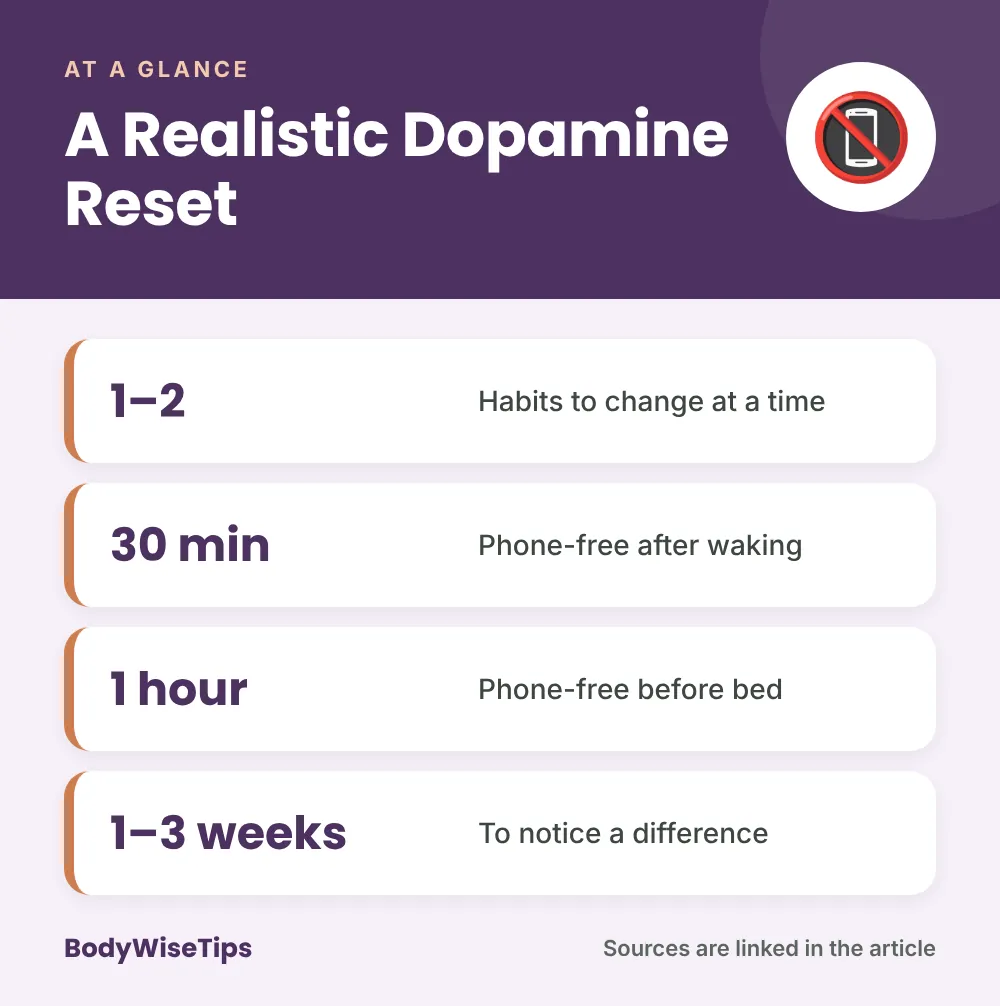
1. Pick one or two problem habits
Be specific. “Scrolling short videos after 9pm” is better than “using my phone too much.”
2. Add friction
- Move distracting apps off your home screen or into a folder.
- Log out after each use.
- Use your phone’s screen time limits.
- Charge your phone outside the bedroom.
3. Set phone-free windows
Start small: the first 30 minutes after waking, meals, and the last hour before bed. These also help your sleep. See how to sleep better at night naturally.
4. Replace, don’t just remove
Have something ready to do instead: a book on the table, a short walk, a puzzle, a hobby, a call to a friend.
5. Practice being bored
Wait in line or sit on the bus without your phone. It feels uncomfortable at first. That discomfort usually fades.
6. Get outside and move
Exercise, time in nature and morning daylight all support mood and focus. Read about morning sunlight.
What to expect
Most people notice:
- Restlessness and urges to check the phone in the first few days
- Gradually better focus and patience
- More enjoyment from slower activities
- Often, better sleep
When it’s more than a habit
Sometimes, feeling unable to enjoy anything, constant restlessness or relying on screens to escape bad feelings are signs of something more, like depression, anxiety or ADHD. The National Institute of Mental Health lists loss of interest or pleasure in activities as a core symptom of depression.
If you feel low most days for two weeks or more, can’t enjoy things you used to, or are struggling to function, talk to a doctor or mental health professional. If you ever have thoughts of harming yourself, contact a crisis line or emergency services right away. In the US, you can call or text 988.
A better way to reset
You can’t detox dopamine, and you don’t need to avoid all pleasure. But the core idea, cutting back on compulsive, instant-reward habits and making room for slower, more meaningful activities, is sound. Pick one habit, add friction, create phone-free times and replace scrolling with something you value. Be patient with yourself, and get help if low mood or loss of interest won’t lift.
Still wondering?
How long does a dopamine detox take to work?
There’s no set timeline because it isn’t a real detox. Most people notice changes in focus and urges within one to three weeks of consistently changing their habits.
Is social media addiction real?
Problematic social media use is widely studied and can cause real harm to sleep, mood and focus, though experts still debate whether it should be called an addiction.
Should I delete social media completely?
Not necessarily. For many people, setting limits works better and lasts longer than quitting entirely.
Sources
- Dopamine fasting: Misunderstanding science spawns a maladaptive fad, Harvard Health Publishing.
- Depression, National Institute of Mental Health.
- 988 Suicide & Crisis Lifeline.
