How to Sleep Better at Night Naturally
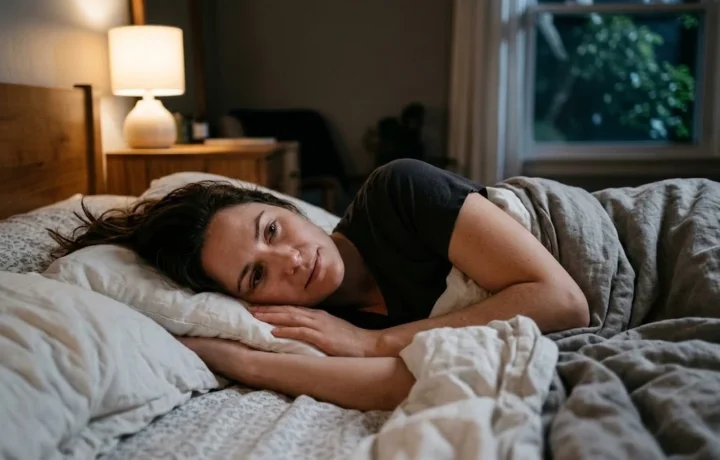
Let me guess — it is past midnight, you have work tomorrow, and your brain simply refuses to shut off.
If you want to know how to sleep better at night naturally, you have come to the right place.
Learning how to sleep better at night naturally is one of the best investments you can make in your overall health.You have tried counting sheep. You have tried putting your phone down. You even downloaded one of those meditation apps that you used exactly once. And yet here you are, wide awake, exhausted but unable to sleep.
You are not broken. And you are definitely not alone.
The American Sleep Association reports that over 70 million Americans deal with some form of sleep disorder. Millions more just struggle with poor quality sleep night after night — without ever getting a real answer as to why.
Here is the thing though. Most sleep problems do not need medication to fix. What they need is a few honest, practical changes — the kind that work with your body instead of against it.
That is exactly what this guide covers. Twelve natural, science-backed ways to finally get the sleep your body has been begging for.
Why Sleep Is Not Just “Rest”
Before we get into the tips, let us clear something up. Sleep is not just the time when nothing is happening. It is actually one of the most active periods for your body.
While you sleep, your brain is filing away memories from the day. Your muscles are repairing themselves. Your immune system is doing its most important work. Your hormones are resetting for tomorrow.
The Centers for Disease Control and Prevention (CDC) recommends that adults get between 7 and 9 hours of sleep per night. And when you consistently fall short of that, the consequences are not just feeling tired. Chronic poor sleep has been linked to:
- Heart disease and high blood pressure
- Weight gain that is surprisingly hard to explain
- Type 2 diabetes
- A weakened immune system that catches every bug going around
- Anxiety, depression, and mood swings
- Memory loss and difficulty concentrating
The point is — this matters. Now let us actually fix it.
12 Natural Ways to Sleep Better at Night Naturally
1. Go to Bed at the Same Time Every Single Night
This one sounds almost too simple. But it might be the single most powerful thing you can do for your sleep.
Your body runs on what scientists call the circadian rhythm — an internal 24-hour clock that regulates when you feel alert and when you feel sleepy. The problem is, most of us destroy this clock every week by staying up late on weekends and then trying to “recover” by sleeping in.
According to the National Sleep Foundation, people who keep consistent sleep and wake times fall asleep faster, sleep more deeply, and wake up feeling genuinely refreshed.
Pick a bedtime that allows you 7-9 hours. Set it as a non-negotiable. Yes, even on Saturdays.
2. Make Your Bedroom a Sleep-Only Zone
Walk into your bedroom right now and ask yourself — does this room feel like a place designed for sleep?
If your bed is where you watch Netflix, scroll Instagram, eat snacks, and take work calls — your brain has learned to associate that space with being awake. That is a problem.
Research published by the National Institutes of Health (NIH) shows that the ideal sleeping environment is dark, quiet, and cool — somewhere between 60 and 67 degrees Fahrenheit (15-19°C).
A few simple changes that make a real difference:
- Blackout curtains if any light comes through your window
- A small fan for both coolness and white noise
- Phone charger moved outside the bedroom
- No TV in the bedroom if you can help it
Your bedroom should feel like a sleep sanctuary — not an entertainment center.
Every tip in this guide is designed to help you sleep better at night naturally — without relying on medication.
3. Put Your Phone Down an Hour Before Bed
Nobody wants to hear this one. But here it is anyway.
The screens on your phone, laptop, and television emit blue light — a specific wavelength that signals to your brain that it is still daytime. This directly suppresses the production of melatonin, the hormone responsible for making you feel sleepy.
The Sleep Foundation found that blue light exposure before bed can delay sleep onset by up to 90 minutes. That is an hour and a half of lying awake that could be avoided simply by putting the phone down earlier.
What to do in that last hour instead? Read a real book. Listen to music. Have a quiet conversation. Write in a journal. Anything that does not involve a glowing screen.
4. Stop Drinking Coffee After 2 PM
A lot of people are unknowingly sabotaging their own sleep with an afternoon coffee they think is harmless.
Caffeine has a half-life of 5 to 7 hours — meaning that 3 PM cup of coffee still has half its caffeine in your bloodstream at 9 PM. Johns Hopkins Medicine confirms this is one of the most commonly overlooked causes of sleep difficulty.
And caffeine hides in more places than just coffee. Watch out for:
- Green and black tea
- Energy drinks
- Dark chocolate
- Certain headache medications
- Some pre-workout supplements
Switch to herbal tea — chamomile is a personal favourite for evenings — and notice the difference within a few days.
5. Try the 4-7-8 Breathing Method
This technique was popularized by Dr. Andrew Weil of the University of Arizona and it works by activating your nervous system’s rest response almost immediately.
Here is how to do it:
- Breathe out completely through your mouth
- Inhale quietly through your nose for 4 seconds
- Hold your breath for 7 seconds
- Exhale fully through your mouth for 8 seconds
- That is one cycle — do it 4 times
It feels a little strange the first time. By the third or fourth night of trying it, most people are surprised by how quickly it quiets a racing mind.
6. Exercise — But Finish Before Evening
Regular exercise is genuinely one of the best things you can do for sleep quality. The Mayo Clinic is clear on this — people who exercise consistently fall asleep faster and experience deeper sleep than those who do not.
But timing matters here. Intense exercise raises your body temperature and releases adrenaline — two things that are great for a workout but terrible for winding down. Try to finish any vigorous exercise at least 3 hours before bedtime.
Morning workouts are ideal. Even a 30-minute walk after breakfast can meaningfully improve your sleep that same night.
7. Stop Eating Heavy Meals Late at Night
Your digestive system does not get a break just because you go to bed. A large meal eaten close to bedtime means your body is working hard to digest food when it should be transitioning into rest mode.
Research published in the American Journal of Gastroenterology links late-night eating directly to increased sleep disruptions and poorer overall sleep quality.
The practical rule: finish your last large meal at least 3 hours before bed. If you are genuinely hungry later, a small snack works fine — a banana, a few almonds, or a warm glass of milk are all solid choices that actually support sleep rather than disrupting it.
Alcohol deserves a special mention here too. It might make you feel drowsy, but it significantly fragments your sleep in the second half of the night. Less alcohol in the evening almost always means better sleep.
8. Take a Warm Shower Before Bed
This one surprises people, but the science behind it is solid.
Taking a warm shower or bath 1 to 2 hours before bedtime causes your body temperature to rise slightly — and then drop as you cool down afterward. That drop in core body temperature is one of the key signals your body uses to initiate sleep.
A study in Sleep Medicine Reviews found that a warm bath taken 1-2 hours before bed helped people fall asleep an average of 10 minutes faster and improved overall sleep quality significantly.
Ten to fifteen minutes is all you need. Nothing complicated about it.
9. Consider These Natural Sleep Supplements
If lifestyle changes alone are not quite enough, certain natural supplements have genuine scientific support behind them. Always speak with your doctor before starting anything new.
| Supplement | What It Does | Typical Dose |
|---|---|---|
| Melatonin | Helps regulate your sleep-wake cycle | 0.5–5mg, 30 mins before bed |
| Magnesium | Relaxes muscles and calms the nervous system | 200–400mg daily |
| Valerian Root | Reduces time needed to fall asleep | 300–600mg before bed |
| Chamomile Tea | Gently reduces anxiety and promotes calm | 1 cup before bed |
| Ashwagandha | Lowers cortisol and stress levels | 300–600mg daily |
According to the NIH National Center for Complementary and Integrative Health, melatonin and magnesium are the two most well-researched natural options for sleep support.
10. Write Down Your Worries Before Bed
Here is something most sleep guides skip entirely — the mental load you carry into bed with you.
If your brain starts replaying arguments, rehearsing tomorrow’s meetings, or reminding you of everything you forgot to do the moment your head hits the pillow — you are not going to sleep well no matter how dark or cool your room is.
The American Psychological Association confirms that stress and anxiety are among the leading causes of insomnia in adults.
A simple fix: keep a notebook by your bed. Spend five minutes before sleep writing down anything that is on your mind — worries, to-do items, unresolved thoughts. Getting it out of your head and onto paper genuinely helps your brain let go of it for the night.
11. Keep Naps Short and Early
A good nap can be wonderful. A bad nap can ruin an entire night’s sleep.
The CDC recommends keeping daytime naps to a maximum of 20 to 30 minutes and avoiding them after 3 PM. Longer naps push you into deeper sleep stages that leave you groggy and make it genuinely harder to fall asleep at night.
If you are dealing with insomnia, cut naps out completely until your nighttime sleep stabilizes. It is a short-term sacrifice that pays off quickly.
12. See a Doctor If Nothing Helps
These tips work for most people. But sometimes poor sleep has an underlying medical cause that no amount of chamomile tea is going to fix.
Please speak with a healthcare professional if you experience:
- Loud snoring or choking sounds during sleep — this could be sleep apnea
- Extreme daytime sleepiness even after a full night in bed
- Uncomfortable sensations in your legs at night that make you need to move them
- Insomnia that has persisted for more than three months
The American Academy of Sleep Medicine has a doctor finder on their website if you need help locating a sleep specialist near you.
The Bottom Line
Here is the honest truth — there is no magic pill for sleep. But there are real, practical changes that genuinely work when you stick with them.
Start with just two or three of these tonight. Maybe put your phone down earlier, keep the room cooler, and try the breathing technique. Give it a week. Build from there.
Good sleep is not something that happens to lucky people. It is something you build — one consistent habit at a time.
The goal is simple — to help you sleep better at night naturally, consistently, and for the long term.
Medical Disclaimer: The information in this article is intended for general informational purposes only and does not constitute medical advice. Please consult a qualified healthcare provider before making any changes to your health routine or beginning any new supplement.
References:
- Centers for Disease Control and Prevention — How Much Sleep Do I Need: https://www.cdc.gov/sleep
- National Sleep Foundation — Sleep Hygiene Tips: https://www.sleepfoundation.org
- Mayo Clinic — Sleep and Exercise: https://www.mayoclinic.org
- National Institutes of Health — Sleep Environment Research: https://www.ncbi.nlm.nih.gov
- Johns Hopkins Medicine — Caffeine and Sleep: https://www.hopkinsmedicine.org
- American Psychological Association — Stress and Sleep: https://www.apa.org
- NIH NCCIH — Natural Sleep Aids: https://www.nccih.nih.gov
- American Academy of Sleep Medicine: https://aasm.org
- Sleep Medicine Reviews — Warm Bath Study: https://www.sciencedirect.com