
How to Lose Belly Fat Naturally: 11 Things That Actually Work
There is something uniquely frustrating about belly fat.
You clean up your diet. You start exercising. You drink more water. And yet that stubborn layer around your midsection just sits there, completely unbothered, as if it did not get the memo.
If that sounds familiar, you are in good company. Belly fat is one of the most searched health topics in the United States every single year — not because people are vain, but because most of us have genuinely tried and felt confused when results did not come.
So before we get into what actually works, let us clear up the one thing that trips most people up from the very beginning.
You Cannot Spot-Reduce Belly Fat
No amount of crunches, sit-ups, or ab machines will specifically burn the fat around your belly. This is one of the most persistent myths in fitness, and believing it wastes a lot of people’s time and energy.
When your body loses fat, it loses it from everywhere — not just the area you are exercising. Where it comes off first depends largely on your genetics. Some people lose it from their face first. Others from their arms or legs. Eventually, with the right habits, it comes off the belly too.
The good news is that belly fat — particularly the deeper visceral fat that wraps around your internal organs — actually responds well to lifestyle changes. According to Harvard Health Publishing, visceral fat is metabolically active, which means it responds faster to diet and exercise changes than the fat sitting just under your skin.
So the goal is not to target your belly specifically. The goal is to create the right conditions in your body for overall fat loss — and the belly tends to follow.
Why Belly Fat Is More Than a Cosmetic Issue
Before we get to the tips, this is worth saying plainly.
Carrying excess fat around your midsection is not just about how you look in your clothes. According to the Centers for Disease Control and Prevention, a waist circumference above 40 inches in men and 35 inches in women is associated with significantly higher risk of type 2 diabetes, heart disease, high blood pressure, certain cancers, and sleep apnea.
This is why losing belly fat — even a modest amount — genuinely improves your health, not just your appearance.
11 Natural Ways to Lose Belly Fat That Are Backed by Science
1. Eat More Protein — Especially at Breakfast
Out of all the dietary changes you can make, increasing your protein intake might give you the most noticeable results for belly fat.
Protein does several things at once. It keeps you full for longer, which means you naturally eat less throughout the day without having to consciously count every calorie. It also requires more energy to digest than carbohydrates or fat — a phenomenon called the thermic effect of food. And when you are losing weight, protein helps you preserve muscle mass, which keeps your metabolism running efficiently.
A study published in the American Journal of Clinical Nutrition found that higher protein diets led to significantly greater reductions in abdominal fat compared to lower protein diets, even when total calorie intake was similar.
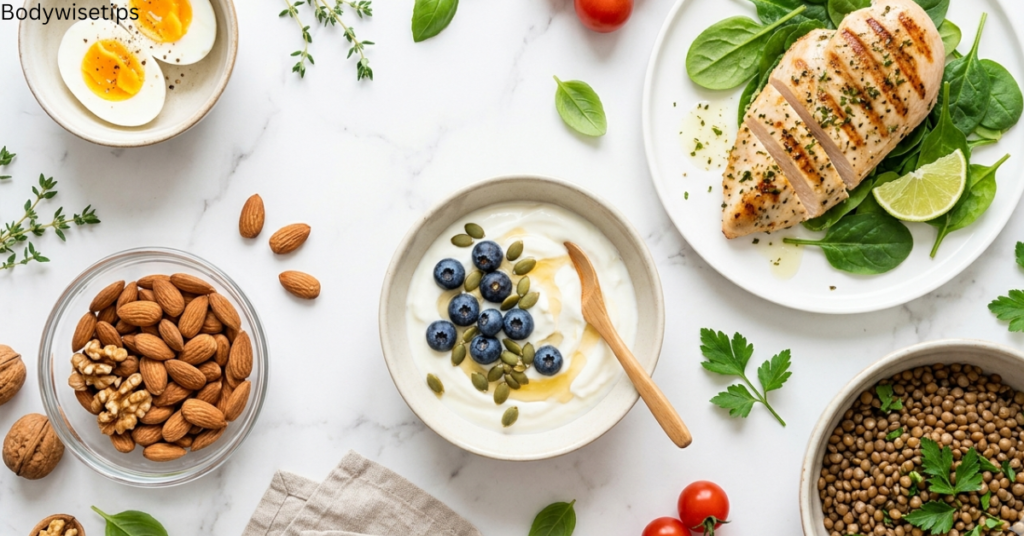
Practical places to add more protein: eggs in the morning, Greek yogurt as a snack, chicken or fish at lunch and dinner, lentils and beans if you prefer plant-based options. You do not need protein shakes or supplements — real food works perfectly well.
2. Cut Back on Added Sugar
The research is very clear that added sugar — the kind manufacturers put into sodas, candy, pastries, flavored yogurts, and packaged snacks — contributes heavily to belly fat accumulation. When you consume large amounts of fructose, your liver can only process so much of it at once. The excess gets converted to fat, and a significant portion of that fat ends up stored around the abdomen.
What this does not mean is that you need to fear fruit. The natural sugar in whole fruit comes packaged with fiber, water, and nutrients that slow its absorption and prevent the same effect.
The target is processed, added sugar. Sodas and sweetened drinks are the single biggest source for most people. Cutting them out — or even just significantly reducing them — can make a meaningful difference over weeks and months.
3. Start Doing Strength Training
Most people who want to lose belly fat go straight for cardio. Running, cycling, the elliptical. And cardio is genuinely helpful. But if that is all you are doing, you are leaving a lot on the table.

Strength training builds muscle, and muscle tissue burns more calories at rest than fat tissue does. This means the more muscle you have, the higher your resting metabolism — and the more fat your body burns even when you are just sitting at your desk or watching television.
Research published by the National Institutes of Health found that combining resistance training with aerobic exercise produced significantly greater reductions in visceral abdominal fat than cardio alone.
You do not need a gym membership to start. Bodyweight exercises — squats, lunges, push-ups, planks — done consistently three to four times a week are enough to build meaningful muscle and shift your body composition over time.
4. Get Serious About Sleep
This one does not get nearly enough attention in conversations about belly fat, and that is a shame because the evidence is strong.

When you sleep less than seven hours a night consistently, two things happen that directly affect belly fat. Your levels of ghrelin — the hormone that makes you feel hungry — go up. And your levels of leptin — the hormone that signals fullness — go down. The result is that you feel hungrier than usual, crave higher-calorie foods, and have less willpower to resist them.
A long-term study published in the journal Sleep found that people who slept five hours or less per night gained significantly more abdominal fat over a five-year period compared to those who slept between six and seven hours.
If you are eating well and exercising but still not seeing results, honestly ask yourself whether you are getting enough sleep. It might be the missing piece.
5. Manage Your Stress
Stress is not just uncomfortable. It has a direct, measurable effect on where your body stores fat.
When you are under chronic stress, your body produces elevated levels of cortisol — often called the stress hormone. And cortisol actively encourages your body to store fat around the abdomen. This is believed to be an evolutionary mechanism — your body perceives stress as a threat and stores energy close to your vital organs as a survival response.
The problem is that your body cannot tell the difference between the stress of running from a predator and the stress of a difficult work deadline. It responds the same way.
According to the American Psychological Association, chronic psychological stress is consistently linked to increased abdominal obesity. Regular exercise, adequate sleep, spending time outdoors, and deliberate relaxation practices like deep breathing or meditation are not soft suggestions — they are evidence-based interventions for cortisol regulation.
6. Eat More Soluble Fiber
Not all fiber is equal when it comes to belly fat.
Soluble fiber dissolves in water and forms a thick gel in your digestive tract. This gel slows the movement of food through your system, makes you feel full for longer after eating, and feeds the beneficial bacteria in your gut — which play a larger role in metabolism and fat storage than scientists previously understood.
Research published in the journal Obesity found that for every 10-gram increase in daily soluble fiber intake, visceral belly fat decreased by about 3.7 percent over five years — without any other dietary changes.
Good sources of soluble fiber include oats, flaxseeds, avocado, Brussels sprouts, legumes like lentils and black beans, and sweet potatoes. Adding two or three of these to your daily diet will make a noticeable difference within a few weeks.
7. Reduce Refined Carbohydrates
This does not mean avoiding all carbohydrates. Whole grains, vegetables, and legumes are carbohydrates, and they are genuinely good for you.
The problem is refined carbohydrates — white bread, white rice, pasta made from white flour, most breakfast cereals, crackers, and baked goods. These foods are digested quickly, spike your blood sugar rapidly, and provide very little satiety. They also tend to promote fat storage, particularly around the abdominal area.
A review published in JAMA Internal Medicine found that people who reduced refined carbohydrates lost significantly more abdominal fat than those who reduced dietary fat, even when total calories were the same.
The swap is straightforward: whole grain bread instead of white, brown rice instead of white, oats instead of sugary cereal, and potatoes with the skin on instead of refined starchy snacks.
8. Drink More Water — Especially Before Meals
Water does not directly burn fat. But it plays a supporting role in fat loss that is easy to overlook.
Drinking water before meals consistently reduces how much you eat at that meal. A study in the journal Obesity found that participants who drank about two cups of water 30 minutes before each meal lost 44 percent more weight over 12 weeks than those who did not.
Water also supports kidney function, which in turn allows the liver to focus on metabolizing stored fat rather than picking up the kidney’s slack — something that happens when you are chronically dehydrated. Aim for eight cups a day as a starting point, and add more if you are exercising or live somewhere hot.
9. Walk More Than You Think You Need To
Walking is underestimated by almost everyone.
It is not glamorous. It does not make a dramatic story. But the research on walking and abdominal fat is genuinely impressive.

A study published in the Journal of Exercise Nutrition and Biochemistry found that obese women who walked for 50 to 70 minutes three times a week for 12 weeks significantly reduced both their body fat and their waist circumference.
The reason walking works is partly because it burns calories and partly because it lowers cortisol levels — which directly affects belly fat storage. A realistic daily target for most people is 8,000 to 10,000 steps. You do not need to do it all at once. A 20-minute walk in the morning and another in the evening adds up quickly.
10. Limit Alcohol
There is a reason the phrase “beer belly” exists.
Alcohol provides empty calories with virtually no nutritional value. And when your body is processing alcohol, it prioritizes burning that over everything else — meaning fat burning is essentially paused while alcohol is in your system. Beyond the calories, alcohol also lowers inhibitions around food choices, increases appetite, and disrupts sleep quality, all of which indirectly contribute to belly fat accumulation.
According to research published in the European Journal of Clinical Nutrition, higher alcohol consumption is consistently associated with greater waist circumference, independent of total calorie intake. You do not need to give it up entirely if you enjoy it. But pulling back meaningfully — even just on weekdays — tends to show results within a few weeks.
11. Be Consistent — Not Perfect
This last point sounds simple, and that is exactly why it gets overlooked.
Most people who struggle with belly fat are not failing because they lack the right information. They are failing because they are inconsistent. They eat well for two weeks, have a difficult weekend, abandon everything, and feel like they are starting from scratch. They exercise for a month, get busy, stop for six weeks, and lose all momentum.
The science on this is unambiguous. Consistency over time — even imperfect consistency — beats intensity followed by abandonment every single time. You do not need a perfect diet. You need a diet that is roughly 80 percent good, most of the time, for months on end.
Belly fat loss is slow. It is measured in months, not weeks. Setting that expectation from the start is not pessimistic — it is what keeps people going long enough to actually see results.
How Long Does It Actually Take?
A safe and sustainable rate of fat loss is roughly half a pound to one pound per week. Given that belly fat is only a portion of your total body fat, visible changes to your midsection typically begin appearing after four to eight weeks of consistent effort, with more significant changes after three to six months.
Variables that affect the timeline include your starting point, your age, your hormonal health, how well you are sleeping, and your stress levels. Men generally see faster results than women due to differences in hormonal profiles and fat distribution patterns.
The honest answer is that it takes longer than most people hope and shorter than most people fear — as long as you stay consistent.
The Bottom Line
Losing belly fat naturally is not about finding the right hack or the right supplement. It is about putting several reasonable habits in place and giving them time to work.
Eat more protein and fiber. Cut back on sugar and refined carbs. Move your body regularly through both cardio and strength training. Sleep well. Manage your stress. Drink enough water.
None of this is revolutionary. All of it works. The difference between the people who see results and the people who do not is almost always persistence — not information.
Start with one or two changes this week. Add more as they become automatic. Your belly fat is not permanent. It just needs you to be consistent long enough to prove it.
Medical Disclaimer: The content in this article is intended for general informational purposes only and is not a substitute for professional medical advice, diagnosis, or treatment. Always consult a qualified healthcare provider before making changes to your diet, exercise routine, or health habits.
References:
- Harvard Health Publishing — Belly Fat and Health: https://www.health.harvard.edu/staying-healthy/how-to-get-rid-of-belly-fat
- Centers for Disease Control and Prevention — Healthy Weight: https://www.cdc.gov/healthyweight
- National Institutes of Health — Exercise and Visceral Fat: https://www.ncbi.nlm.nih.gov/pmc/articles/PMC4356583/
- American Journal of Clinical Nutrition — Protein and Abdominal Fat: https://academic.oup.com/ajcn
- American Psychological Association — Stress and Obesity: https://www.apa.org
- Journal of Exercise Nutrition and Biochemistry — Walking Study: https://www.ncbi.nlm.nih.gov/pmc/articles/PMC4241903/
- European Journal of Clinical Nutrition — Alcohol and Waist Circumference: https://www.nature.com/ejcn
- JAMA Internal Medicine — Low Carb vs Low Fat: https://jamanetwork.com/journals/jamainternalmedicine
- Obesity Journal — Soluble Fiber and Water Studies: https://onlinelibrary.wiley.com/journal/1930739x