
Intermittent Fasting for Beginners: How to Start the 16:8 Method the Right Way
You have probably heard about intermittent fasting by now. A coworker swears by it. Someone in your family lost twenty pounds doing it. Half the health articles you stumble across mention it in the first paragraph.
But if you have spent any time trying to understand what it actually involves, you may have walked away more confused than when you started. Different schedules, conflicting advice, and bold claims about everything from weight loss to brain health — it is a lot to sort through.
This guide cuts through all of that. It covers exactly what intermittent fasting is, how the most beginner-friendly version of it works, what you can and cannot eat during a fast, and what you should realistically expect in the first few weeks. No hype, no exaggeration — just a clear and honest explanation.
What Intermittent Fasting Actually Is
Intermittent fasting is not a diet in the traditional sense. It does not tell you what to eat. It tells you when to eat.
The idea is straightforward. You divide your day into two periods — an eating window and a fasting window. During the eating window, you eat your meals normally. During the fasting window, you consume nothing that contains calories. Water, black coffee, and plain herbal tea are all fine during a fast because they do not trigger the metabolic response that breaks a fast.
That is the entire concept at its core. The variation comes from how long those windows are and when they fall during the day.
According to Johns Hopkins Medicine, after several hours without food, your body exhausts its immediate sugar stores and begins burning fat for fuel — a process researchers call metabolic switching. This is the physiological mechanism behind most of intermittent fasting’s benefits.
The Different Types of Intermittent Fasting
Before going further, it helps to understand that intermittent fasting is not one single approach. There are several common variations, and they differ significantly in how demanding they are.
The 16:8 method is the most widely practiced. You fast for 16 hours and eat within an 8-hour window. Most people do this by skipping breakfast, eating their first meal around noon, and finishing their last meal by 8 in the evening.
The 14:10 method is a gentler version — 14 hours of fasting and a 10-hour eating window. This is often recommended as a starting point for people who find 16 hours difficult at first, particularly women who may be more sensitive to longer fasting periods.
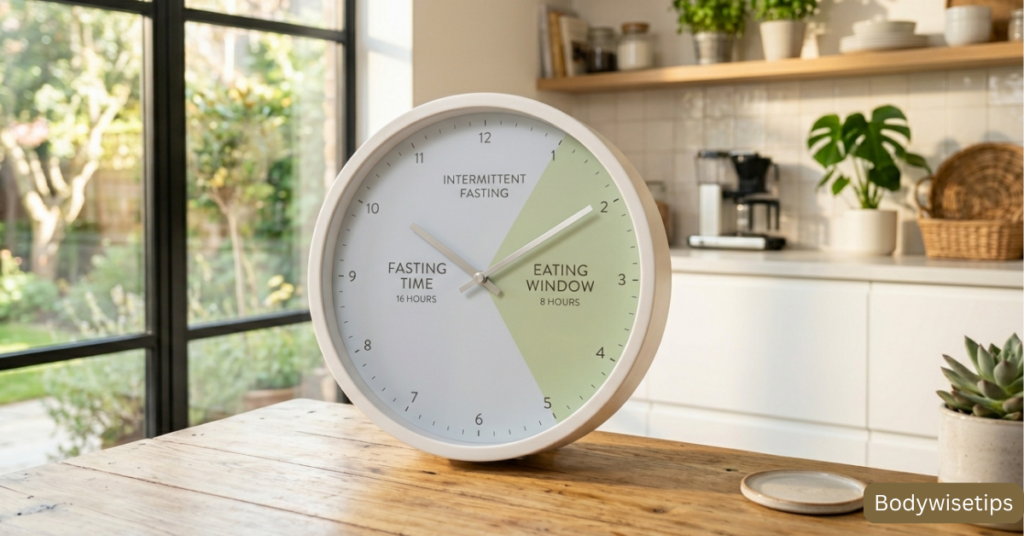
The 5:2 method involves eating normally for five days of the week and severely restricting calories — usually to around 500 calories — on two non-consecutive days. This is more demanding and less beginner-friendly than time-restricted methods.
The OMAD method, which stands for One Meal a Day, is exactly what it sounds like. It is a 23:1 fasting ratio and is generally not recommended for beginners or anyone without medical supervision.
For beginners, the 16:8 method offers the best balance between effectiveness and sustainability. As Cleveland Clinic notes, it is convenient because the majority of the fasting window takes place overnight while you are already asleep.
Why So Many People Are Trying It
Before getting into how to start, it is worth understanding why intermittent fasting has become so popular — and whether the reasons hold up to scrutiny.
Weight loss is the most common motivation, and the evidence here is reasonably solid. Research from Harvard T.H. Chan School of Public Health found that daily intermittent fasting helps people lose weight — roughly the equivalent of 250 calories per day, or about half a pound per week — not by burning more calories, but by naturally reducing how much people eat. It also reduces key hunger hormones like ghrelin, which means people who practice it consistently tend to feel less hungry over time, not more.
Beyond weight loss, research published by the National Institutes of Health points to other potential benefits including improved blood sugar control, reduced insulin resistance, lower inflammation markers, and better cholesterol levels. Young men who fasted for 16 hours in one study showed measurable fat loss while maintaining their muscle mass.
It is important to say clearly though — intermittent fasting is not magic. It works primarily because most people eat less when their eating window is restricted. If you use your 8-hour window to eat large, unhealthy meals, you will not see the results people associate with this approach.
How to Start the 16:8 Method — Step by Step
The most common mistake people make with intermittent fasting is trying to jump straight to a strict 16-hour fast from day one. For most people, that leads to intense hunger, low energy, and giving up within a week.
A smarter approach is to extend your overnight fast gradually until 16 hours feels natural rather than painful.
Start by noting what time you eat your last meal in the evening — say, 8 PM. Then push your first meal the next day back by one hour at a time over one to two weeks. If you normally eat breakfast at 7 AM, try 8 AM for a few days, then 9 AM, then 10 AM, then noon. By the time you reach noon, you are naturally hitting a 16-hour fast without your body treating it as deprivation.
Once you settle into your eating window, pick a consistent schedule and stick to it. Consistency matters more than the specific hours you choose. Some people do noon to 8 PM. Others prefer 10 AM to 6 PM. Either works — what matters is that your body learns to expect food at certain times and learns to function without it at others.
What You Can and Cannot Have During the Fast
This is one of the most common questions beginners have, and getting it right matters.
During your fasting window, these are fine to consume because they contain no or negligible calories and do not trigger an insulin response that would break your fast:
Water — plain, sparkling, or with a squeeze of lemon — is your best companion during a fast. Black coffee, with no milk, cream, or sugar, is widely considered acceptable and may even enhance some of the metabolic benefits of fasting. Plain herbal teas and green tea with nothing added are also fine.
What breaks your fast: anything with calories. This includes milk or cream in your coffee, fruit juice, smoothies, protein shakes, even small snacks. Artificial sweeteners are a gray area — some research suggests they do not break a fast in the traditional sense, but they can trigger cravings and hunger responses in some people, which defeats the practical purpose of fasting.
What to Eat During Your Eating Window
Intermittent fasting does not prescribe a specific diet, but what you eat during your eating window has a significant impact on how you feel and what results you get.
The goal is to eat balanced, satisfying meals that give your body the nutrients it needs without going overboard on calories. Protein should be a priority at every meal — it keeps you full and preserves muscle mass. Healthy fats from sources like avocado, olive oil, nuts, and fatty fish help sustain energy between meals. Complex carbohydrates from vegetables, legumes, and whole grains provide steady fuel rather than the spikes and crashes that come from refined carbs and sugar.
The American Journal of Clinical Nutrition has consistently found that higher protein intake during weight loss leads to better fat loss outcomes and helps prevent the muscle loss that can accompany calorie restriction.
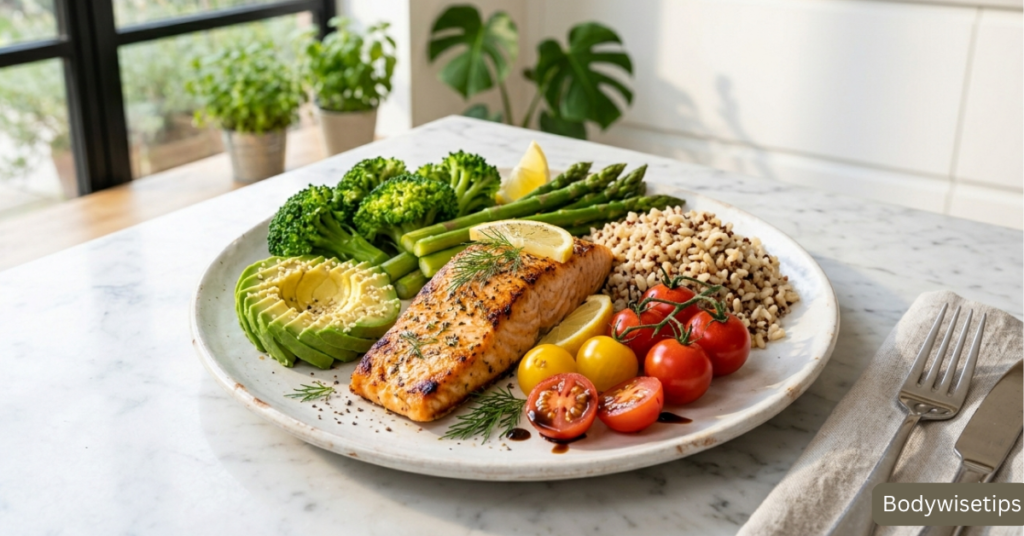
Practically speaking, a typical 16:8 day might look like this: a protein-rich meal around noon — eggs, avocado, and vegetables, or grilled chicken with a large salad. A mid-afternoon snack if needed — nuts, Greek yogurt, or a piece of fruit. A satisfying dinner by 7 or 7:30 PM with lean protein, vegetables, and a moderate portion of whole grains or legumes.
What to Realistically Expect in the First Few Weeks
This section might be the most important one in this entire guide, because unrealistic expectations are what cause most people to quit before they see results.
The first three to five days are usually the hardest. Your body is accustomed to receiving food at regular intervals, and when that pattern changes, it protests. You may feel hungry in the morning, slightly irritable, or low on energy. This is normal. It is your body adjusting, not your body telling you that fasting is wrong for you.
By the end of the first week, most people notice that morning hunger subsides. The body adapts faster than most people expect. By weeks two and three, the fasting period tends to feel genuinely easy for most people — some even report that they no longer feel hungry in the morning at all.
In terms of physical changes, visible weight loss for most people begins showing between weeks two and four. The first week often shows a drop on the scale that is largely water weight as glycogen stores deplete. Actual fat loss accumulates more gradually but steadily after that.
Sleep quality, energy levels, and mental clarity are things many people report improving after the first week or two of consistent fasting — though these benefits vary considerably between individuals. The connection between fasting and sleep is worth noting: people who manage their eating window well and stop eating a few hours before bed often report better sleep quality. You can read more about natural sleep improvement in our guide on how to sleep better at night naturally.
Common Mistakes Beginners Make
Eating too much during the eating window is by far the most common reason people do not see results. If you compensate for the fasting period by eating significantly more than you normally would, you have effectively cancelled out the calorie deficit that makes intermittent fasting work.
Breaking the fast with poor food choices is another frequent mistake. After 16 hours without food, blood sugar is low and hunger is at its peak — which makes it easy to reach for fast food, sugary snacks, or a large carbohydrate-heavy meal. This causes a significant blood sugar spike followed by a crash that leaves you feeling tired and hungry again within a couple of hours. Breaking your fast with protein and fiber-rich food makes an enormous practical difference.
Not drinking enough water during the fast is something many people overlook. Hunger and thirst feel similar in the body. Many times what feels like intense hunger during a fast is actually mild dehydration. Drinking a full glass of water when hunger hits often makes the sensation subside within fifteen minutes.

Choosing a fasting schedule that does not fit your life is a subtler but important issue. If your work schedule, social life, or family routine makes it genuinely difficult to maintain a noon-to-8 PM window consistently, pick a different window. The best schedule is the one you can actually stick to.
Who Should Not Try Intermittent Fasting
This section matters and should not be skipped.
Intermittent fasting is not appropriate for everyone. According to MedStar Health, people who should avoid intermittent fasting or only try it under direct medical supervision include anyone under 18, people who are pregnant or breastfeeding, individuals with a history of eating disorders or restrictive eating patterns, people with type 1 diabetes or those on insulin medication, and anyone who has been advised by their doctor to eat at regular intervals.
If you have any existing health condition or take regular medication, speak with your doctor before starting intermittent fasting. This is not a formality — fasting affects blood sugar, blood pressure, and medication absorption in ways that genuinely matter for people managing health conditions.
A Simple 7-Day Starter Plan
If you want a structured way to begin, this gentle progression will get you to the 16:8 method by the end of the week without the shock of jumping straight in.
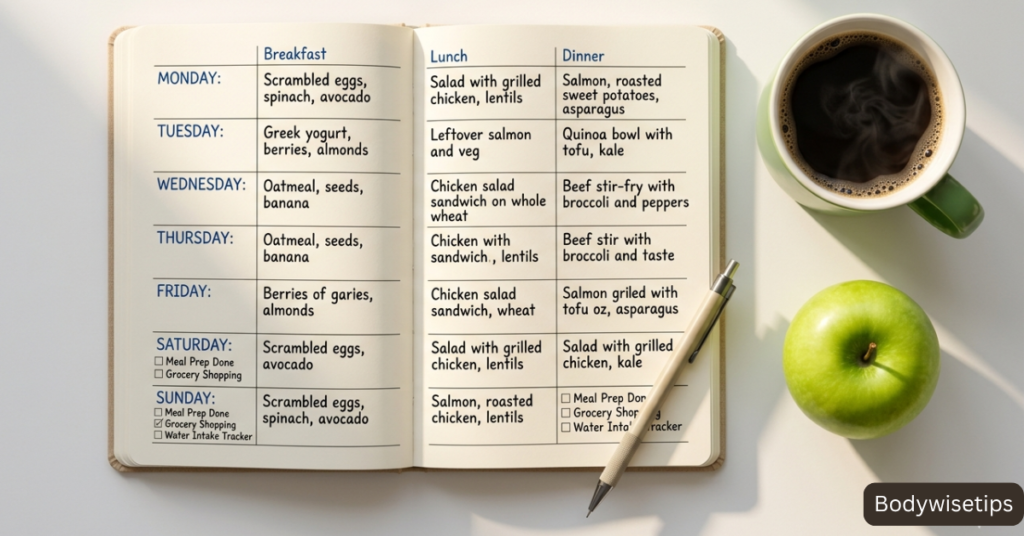
| Day | Eating Window | Fasting Hours |
|---|---|---|
| Day 1 & 2 | 8 AM to 8 PM | 12 hours |
| Day 3 & 4 | 9 AM to 7 PM | 14 hours |
| Day 5 & 6 | 10 AM to 6 PM | 16 hours |
| Day 7 onward | 12 PM to 8 PM | 16 hours |
During every fasting window, drink water consistently. During every eating window, focus on protein, vegetables, healthy fats, and whole grains. Keep processed food, refined sugar, and alcohol to a minimum — these are the things most likely to make hunger worse and results worse during the hours that follow.
The Bottom Line
Intermittent fasting works for a lot of people, and the reason is simple. It provides a structure that naturally reduces how much most people eat, without requiring them to count every calorie or give up specific foods permanently.
The 16:8 method is the most practical starting point for beginners. It is sustainable, fits into most daily schedules, and the evidence supporting it is more solid than most dietary approaches you will encounter.
That said, it is not for everyone, and it is not a shortcut. Combined with a reasonably healthy diet — the kind we discuss in our article on natural ways to lose belly fat — intermittent fasting can be a genuinely useful tool. Used in isolation as a reason to eat whatever you want within an 8-hour window, it is unlikely to deliver the results you are hoping for.
Start slowly, be consistent, drink enough water, eat well during your eating window, and give it at least three to four weeks before drawing any conclusions. That is the honest advice — and it is the advice that actually leads to results.
Medical Disclaimer: This article is intended for general informational and educational purposes only. It is not a substitute for professional medical advice, diagnosis, or treatment. Always consult a qualified healthcare provider before beginning any new diet or fasting regimen, particularly if you have an existing health condition.
References:
- Johns Hopkins Medicine — Intermittent Fasting: https://www.hopkinsmedicine.org/health/expert-qa/intermittent-fasting-what-is-it-and-how-does-it-work
- Harvard T.H. Chan School of Public Health — Benefits of Intermittent Fasting: https://hsph.harvard.edu/news/the-health-benefits-of-intermittent-fasting/
- Cleveland Clinic — Types of Intermittent Fasting: https://health.clevelandclinic.org/intermittent-fasting-4-different-types-explained
- MedStar Health — Intermittent Fasting FAQ: https://www.medstarhealth.org/blog/intermittent-fasting-faq
- National Institutes of Health — Fasting and Metabolic Health: https://www.ncbi.nlm.nih.gov/pmc/articles/PMC8839325/
- Healthline — Intermittent Fasting 101: https://www.healthline.com/nutrition/intermittent-fasting-guide
- American Journal of Clinical Nutrition — Protein and Fat Loss: https://academic.oup.com/ajcn
- Diet Doctor — Complete IF Guide: https://www.dietdoctor.com/intermittent-fasting
- Mass General Brigham — IF Benefits and Risks: https://www.massgeneralbrigham.org/en/about/newsroom/articles/pros-and-cons-of-intermittent-fasting